

Antenatal Care in Indore is an important part of maintaining maternal and fetal health throughout pregnancy. Regular antenatal check-ups allow an obstetrician to monitor the mother’s health, assess the baby’s growth and development, identify potential complications early, and provide guidance about nutrition, supplements, physical activity, vaccinations, investigations, and preparation for childbirth. WHO recommends regular contact with skilled healthcare professionals throughout pregnancy because ongoing assessment provides opportunities to detect and manage potential complications.
At Indore Gynec Centre, Dr. Abhilasha Khandelwal Billore provides comprehensive care for women during pregnancy and childbirth. She has an M.S. in Obstetrics & Gynecology from the University of Gujarat, is a Gold Medalist in Gynecology, and has more than 18 years of experience in women’s healthcare. Her areas of expertise include normal and high-risk pregnancies, obstetric care, laparoscopic surgeries, infertility treatment, IVF, and IUI. Women searching for a Gynecologist in Indore can receive pregnancy care based on their individual health, pregnancy history, and medical needs.
Why Is Antenatal Care in Indore Important During Pregnancy?
Pregnancy involves continuous physical and physiological changes. Regular antenatal care helps monitor these changes and provides an opportunity to identify conditions that may affect the mother or developing baby. Routine prenatal care may include blood pressure and weight measurements, assessment of fetal growth, screening tests, ultrasound examinations, and discussions about nutrition, medicines, symptoms, and lifestyle.
Antenatal care is not limited to treating problems after they appear. It also focuses on preventive care and early identification of risk factors. Conditions such as anemia, gestational diabetes, high blood pressure, infections, and other pregnancy-related complications may require monitoring or treatment during pregnancy.
A Best Gynecologist in Indore can also adjust the frequency and type of antenatal visits according to the mother’s health, pregnancy history, age, existing medical conditions, and whether the pregnancy is considered high-risk. Not every pregnancy follows exactly the same appointment schedule.

Common Goals of Antenatal Care in Indore
The purpose of Antenatal Care in Indore is to support a healthy pregnancy while preparing the mother and family for childbirth and the postnatal period. Important goals include:
Monitoring Maternal Health
Regular appointments help track blood pressure, weight, symptoms, and other aspects of maternal health throughout pregnancy.
Monitoring Baby’s Growth
Healthcare professionals assess fetal development according to the stage of pregnancy. Ultrasound and other assessments may be recommended when clinically appropriate.
Identifying Pregnancy Complications
Regular screening can help identify conditions such as anemia, gestational diabetes, infections, and pregnancy-related hypertension.
Providing Nutritional Guidance
Pregnancy increases nutritional requirements. A doctor may recommend appropriate dietary changes and supplements based on individual needs.
Planning for Delivery
As pregnancy progresses, antenatal appointments can help discuss delivery planning, warning signs, birth preferences, and preparation for childbirth.
Supporting High-Risk Pregnancies
Women with certain medical conditions or previous pregnancy complications may require closer monitoring and additional investigations.
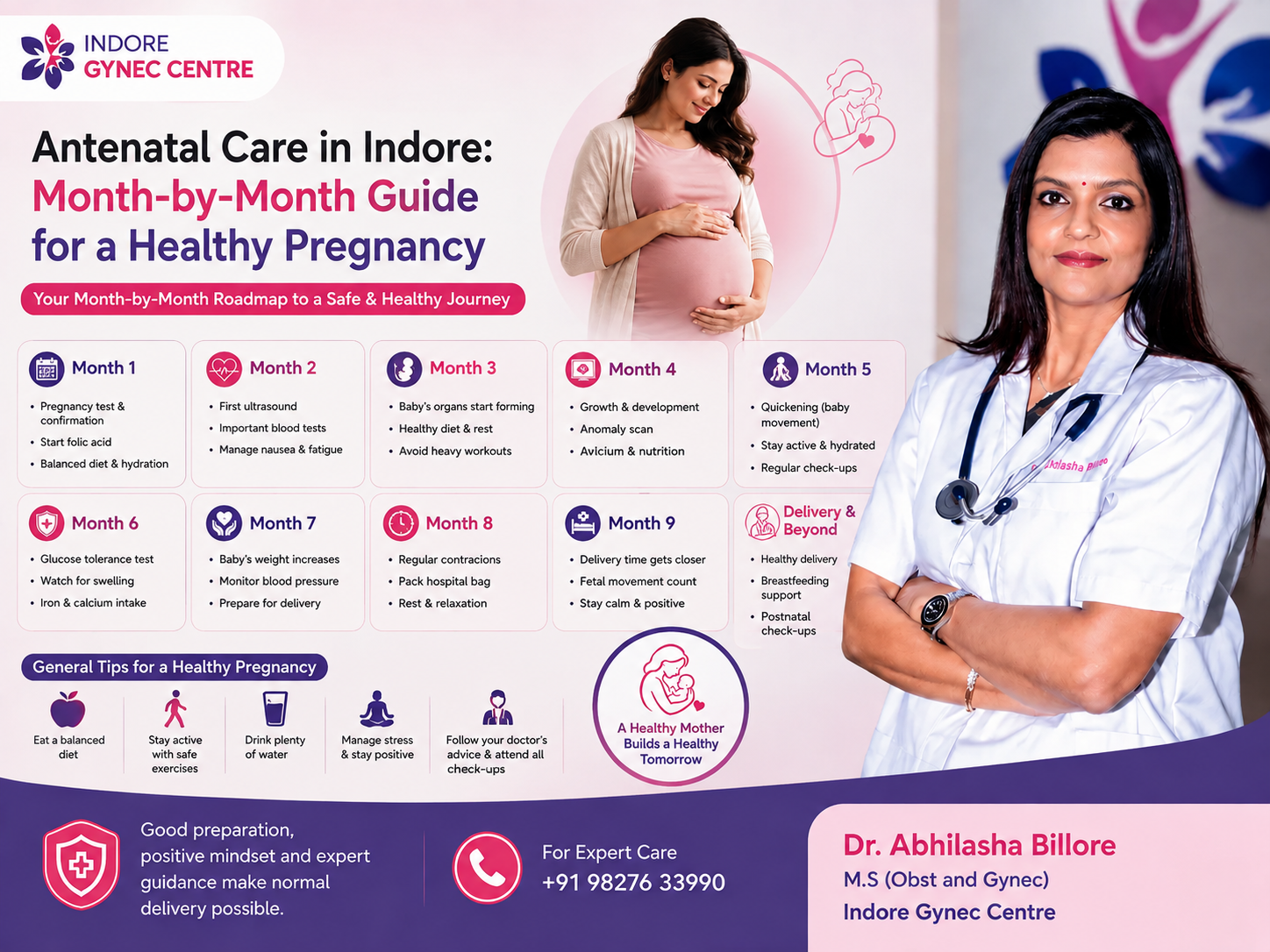
Month-by-Month Antenatal Care in Indore
Pregnancy is commonly divided into three trimesters, but monitoring takes place throughout all nine months. The exact schedule of appointments and investigations varies according to individual circumstances. WHO’s antenatal care model recommends at least eight contacts during pregnancy, beginning in the first 12 weeks, although care plans may be adapted to individual needs and local healthcare systems.
Month 1: Confirming Pregnancy and Starting Antenatal Care
The first month is when many women discover they are pregnant. Some may experience a missed period, nausea, breast tenderness, tiredness, or increased urination, while others may have very few symptoms.
Once pregnancy is confirmed, starting Antenatal Care in Indore early is important. The first appointment generally includes discussion of the last menstrual period, previous pregnancies, medical history, medications, allergies, family history, and existing health conditions. ACOG recommends beginning prenatal care in the first trimester, with the timing adapted according to individual circumstances.
Your doctor may recommend blood and urine investigations, blood group and Rh testing, and screening for certain infections and other health conditions.
Important Focus During Month 1
- Confirm pregnancy and estimate gestational age
- Review previous pregnancy and medical history
- Discuss current medicines and supplements
- Begin recommended folic acid supplementation
- Assess existing conditions such as diabetes or thyroid problems
- Plan appropriate blood and urine investigations
- Discuss nutrition and healthy pregnancy habits
Month 2: Early Pregnancy Assessment
During the second month, pregnancy symptoms may become more noticeable. Nausea, vomiting, fatigue, food aversions, and breast tenderness are common, although every woman experiences pregnancy differently.
A Gynecologist in Indore may assess maternal health and determine whether an ultrasound or additional investigations are appropriate. An early ultrasound may help establish gestational age and assess pregnancy development when clinically indicated.
This is also a useful stage to discuss any symptoms that are causing concern. Persistent vomiting, significant abdominal pain, vaginal bleeding, fever, or other unusual symptoms should not be ignored.
Important Focus During Month 2
- Monitor early pregnancy symptoms
- Assess pregnancy progression when required
- Review blood and urine test results
- Continue prescribed supplements
- Maintain adequate hydration and nutrition
- Discuss medicines that are safe during pregnancy
- Report unusual pain or bleeding promptly
Month 3: Completing the First Trimester
The third month marks the end of the first trimester. During this period, the doctor may review maternal health, pregnancy progression, and available screening results.
Certain prenatal screening tests may be offered depending on gestational age, maternal age, medical history, and individual risk factors. The timing and selection of screening tests should be discussed with the treating obstetrician.
Antenatal appointments during this stage also provide an opportunity to discuss common concerns such as nausea, constipation, fatigue, sleep changes, and physical activity.
For women looking for Antenatal Care in Indore, early and consistent monitoring can help establish a pregnancy care plan that continues through the second and third trimesters.
Important Focus During Month 3
- Review first-trimester screening
- Monitor maternal weight and blood pressure
- Assess fetal development as appropriate
- Continue recommended supplements
- Discuss physical activity and nutrition
- Review any pregnancy-related symptoms
- Plan second-trimester investigations
Second Trimester: Months 4 to 6
The second trimester is often associated with increased energy and reduced early-pregnancy symptoms, although experiences vary. The baby continues to grow rapidly, and prenatal monitoring remains important.
Month 4: Monitoring Maternal and Fetal Progress
During the fourth month, antenatal visits focus on monitoring the mother’s health and the developing pregnancy. Blood pressure, weight, symptoms, and fetal development may be assessed.
Depending on the pregnancy and previous test results, the doctor may recommend additional screening or ultrasound examinations.
A Best Gynecologist in Indore can also guide you about appropriate physical activity, dietary requirements, supplements, and symptoms that require medical attention.
Important Focus During Month 4
- Monitor maternal health
- Review previous investigations
- Assess fetal growth when required
- Continue prescribed supplements
- Maintain a balanced diet
- Follow recommended physical activity
- Discuss any new symptoms
Month 5: Detailed Pregnancy Assessment
The fifth month is an important period for fetal development. Depending on individual circumstances and local practice, an ultrasound examination may be recommended to assess fetal anatomy and development.
WHO recommends an ultrasound before 24 weeks of gestation to help estimate gestational age and improve detection of certain fetal conditions and multiple pregnancies.
At this stage, some women may begin noticing fetal movements. The timing varies between individuals, particularly between first and subsequent pregnancies.
Important Focus During Month 5
- Monitor fetal growth and development
- Complete recommended ultrasound assessment
- Continue routine maternal monitoring
- Discuss fetal movement when it becomes noticeable
- Maintain adequate nutrition and hydration
- Continue prescribed supplements
- Address any new discomfort or symptoms
Month 6: Screening for Gestational Diabetes and Other Conditions
The sixth month brings pregnancy closer to the third trimester. Screening for gestational diabetes is commonly performed between 24 and 28 weeks, although testing may be recommended earlier for women with specific risk factors.
A doctor may also continue monitoring blood pressure, weight, fetal growth, and other pregnancy-related parameters.
If anemia, high blood pressure, abnormal blood sugar, or another condition is detected, the pregnancy care plan may be modified accordingly.
Important Focus During Month 6
- Gestational diabetes screening when recommended
- Continue blood pressure monitoring
- Assess fetal growth
- Monitor maternal weight
- Review nutritional requirements
- Discuss warning signs
- Prepare for more frequent third-trimester monitoring
Third Trimester: Months 7 to 9
The third trimester focuses increasingly on fetal growth, maternal health, preparation for delivery, and identification of conditions that may develop later in pregnancy.
Month 7: Beginning the Third Trimester
The seventh month marks an important transition into the final trimester. Antenatal visits may become more frequent depending on the pregnancy and individual risk factors.
The doctor may monitor blood pressure, maternal symptoms, fetal growth, and other indicators of maternal and fetal well-being.
Women may experience back discomfort, leg swelling, sleep difficulties, heartburn, or increased urinary frequency. Although many of these symptoms can occur normally during pregnancy, significant or sudden changes should be discussed with a healthcare professional.
Important Focus During Month 7
- Monitor fetal growth
- Continue maternal blood pressure checks
- Review pregnancy symptoms
- Assess for signs of complications
- Continue recommended nutrition and supplements
- Discuss birth preparation
- Understand warning signs requiring medical attention
Month 8: Preparing for Delivery
During the eighth month, antenatal appointments become increasingly important as the delivery date approaches. The doctor may monitor fetal position, growth, maternal blood pressure, symptoms, and other factors relevant to delivery planning.
Women with high-risk pregnancies may require additional appointments, tests, or fetal monitoring depending on their medical condition. ACOG notes that prenatal care schedules may be tailored according to individual risk and health needs.
This is also a good time to discuss the expected mode of delivery, hospital preparation, emergency contact arrangements, breastfeeding, and newborn care.
Important Focus During Month 8
- Monitor maternal and fetal health
- Assess fetal growth and position
- Review delivery planning
- Discuss hospital and birth preparation
- Continue recommended medications and supplements
- Recognize signs of preterm labour
- Arrange support for the postpartum period
Month 9: Final Antenatal Checks and Delivery Preparation
The ninth month is the final stage of pregnancy. Antenatal appointments may become more frequent as the expected delivery date approaches.
The doctor may assess maternal blood pressure, fetal position, fetal heart activity, symptoms of labour, and other factors relevant to delivery. The exact investigations required depend on the pregnancy and clinical situation.
Women should understand when to contact their healthcare provider or go to the hospital. Signs such as regular painful contractions, leaking of fluid, vaginal bleeding, reduced fetal movement, severe headache, vision changes, sudden swelling, or severe abdominal pain require prompt medical evaluation.
Important Focus During Month 9
- Final maternal and fetal assessments
- Monitor fetal position
- Discuss signs of labour
- Prepare for delivery
- Review birth and hospital plans
- Follow medical instructions regarding tests and medications
- Prepare for breastfeeding and postpartum care
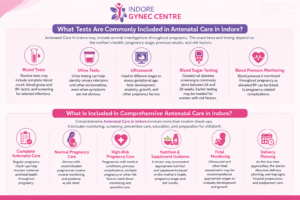
What Tests Are Commonly Included in Antenatal Care in Indore?
Antenatal Care in Indore may include several investigations throughout pregnancy. The exact tests and timing depend on the mother’s health, pregnancy stage, previous results, and risk factors.
Blood Tests
Routine pregnancy blood tests may include complete blood count, blood group and Rh factor, and screening for selected infections. Additional tests may be recommended according to individual circumstances.
Urine Tests
Urine testing can help identify urinary infections and other abnormalities. Some urinary infections may occur without obvious symptoms, which is one reason screening may be recommended during pregnancy.
Ultrasound
Ultrasound can be used at different stages of pregnancy to assess gestational age, fetal development, anatomy, growth, and other pregnancy-related factors.
Blood Sugar Testing
Gestational diabetes screening is commonly performed during the second half of pregnancy, usually between 24 and 28 weeks. Earlier testing may be appropriate for women with risk factors.
Blood Pressure Monitoring
Blood pressure is commonly monitored throughout pregnancy because elevated blood pressure can be associated with pregnancy-related complications. WHO’s antenatal care recommendations include blood pressure measurement during pregnancy contacts.
What Is Included in Comprehensive Antenatal Care in Indore?
Comprehensive Antenatal Care in Indore involves more than routine check-ups. It includes monitoring, screening, preventive care, education, and preparation for childbirth.
Complete Antenatal Care
Regular pregnancy check-ups help monitor maternal and fetal health throughout pregnancy.
Normal Pregnancy Care
Women with uncomplicated pregnancies can receive routine monitoring and guidance according to their pregnancy stage and individual needs.
High-Risk Pregnancy Care
Pregnancies involving certain medical conditions, previous complications, multiple pregnancy, or other risk factors may require closer monitoring and specialist care.
Nutrition and Supplement Guidance
A doctor may recommend appropriate nutritional measures and supplements based on the mother’s health, pregnancy stage, and investigation results.
Fetal Monitoring
Ultrasound and other fetal assessments may be recommended at appropriate stages to evaluate development and growth.
Delivery Planning
As the due date approaches, the doctor can discuss delivery planning, warning signs, hospital preparation, and postpartum care.
Who May Need High-Risk Antenatal Care in Indore?
Not every pregnancy carries the same level of risk. Some women may require more frequent monitoring because of existing health conditions, previous pregnancy complications, age-related factors, or complications that develop during the current pregnancy.
A Gynecologist in Indore may consider a pregnancy higher risk when factors such as diabetes, hypertension, previous preterm birth, previous pregnancy loss, multiple pregnancy, placenta-related problems, or other maternal or fetal concerns are present.
High-risk pregnancy care does not necessarily mean that complications will occur. It means the pregnancy may require additional monitoring, investigations, specialist input, or changes in the care plan.
What Happens During an Antenatal Care Consultation?
The first Antenatal Care in Indore consultation generally begins with a detailed discussion about your pregnancy and medical history. The doctor may ask about the first day of your last menstrual period, previous pregnancies, previous deliveries, miscarriages, medical conditions, surgeries, medications, allergies, and family history. ACOG recommends bringing relevant medical, medication, pregnancy, and vaccination information to the first prenatal visit.
During subsequent appointments, maternal health and fetal development are monitored according to the stage of pregnancy. Blood pressure, weight, fetal heart activity, fundal height, ultrasound findings, and laboratory investigations may be reviewed when appropriate.
Dr. Abhilasha Khandelwal Billore can also discuss nutrition, supplements, physical activity, pregnancy symptoms, warning signs, delivery planning, and any concerns you may have about the pregnancy.
Why Choose a Gynecologist in Indore for Antenatal Care?
Choosing an experienced obstetrician is an important part of pregnancy care. Dr. Abhilasha Khandelwal Billore has more than 18 years of experience in women’s healthcare and holds an M.S. in Obstetrics & Gynecology from the University of Gujarat. She is also a Gold Medalist in Gynecology.
She is the Founder of Indore Gynec Centre and serves as Director of Coral Hospital. Her clinical expertise includes normal and high-risk pregnancies, obstetric care, laparoscopic and hysteroscopic procedures, infertility treatment, IVF, and IUI.
Her experience in managing different aspects of women’s healthcare allows pregnancy care to be planned according to individual maternal health, pregnancy history, and clinical requirements.
Patients looking for a Best Gynecologist in Indore can benefit from an approach that emphasizes regular monitoring, appropriate investigations, preventive care, and preparation for childbirth.
How Can You Support a Healthy Pregnancy Alongside Antenatal Care in Indore?
For many women, regular medical care works best when supported by healthy daily habits. Your obstetrician can provide guidance according to your pregnancy and medical needs.
Follow a Balanced Pregnancy Diet
Include a variety of vegetables, fruits, whole grains, protein sources, and other nutrient-rich foods according to your doctor’s recommendations.
Take Prescribed Supplements
Iron, folic acid, calcium, vitamin D, or other supplements may be recommended depending on individual nutritional and medical needs. Do not start additional supplements without discussing them with your doctor.
Stay Physically Active When Appropriate
Physical activity may be beneficial during an uncomplicated pregnancy, but the type and intensity should be appropriate for your health and pregnancy.
Avoid Smoking, Alcohol and Tobacco
Avoiding tobacco, alcohol, and other harmful substances is an important part of protecting maternal and fetal health. WHO includes counselling on tobacco and substance use as part of antenatal care.
Attend Scheduled Antenatal Visits
Regular appointments provide opportunities to monitor pregnancy progression and identify potential problems early.
Stay Hydrated
Adequate fluid intake can support normal body functions and may help with some common pregnancy-related symptoms.
Get Adequate Rest
Pregnancy can increase physical and emotional demands. Adequate sleep and rest can support overall well-being.
Know Pregnancy Warning Signs
Severe abdominal pain, heavy bleeding, leaking fluid, severe headache, vision changes, significant swelling, fever, breathing difficulty, or reduced fetal movement should be discussed promptly with a healthcare professional.
How to Choose the Right Antenatal Care in Indore?
There is no single pregnancy-care plan that works exactly the same way for every woman. The frequency of visits, investigations, ultrasound examinations, and monitoring depends on the stage of pregnancy and individual health factors.
A Best Gynecologist in Indore can evaluate your medical and pregnancy history before creating an appropriate antenatal care plan. Women with uncomplicated pregnancies may follow routine monitoring, while those with high-risk factors may require additional appointments and investigations.
Rather than delaying appointments until symptoms appear, it is better to begin pregnancy care early and continue scheduled monitoring throughout all three trimesters. WHO recommends the first antenatal contact within the first 12 weeks and continued contacts throughout pregnancy.
When Should You Start Antenatal Care in Indore?
Antenatal care should ideally begin as soon as pregnancy is confirmed. Starting early allows the doctor to establish gestational age, review medical history, identify risk factors, recommend appropriate initial investigations, and discuss nutrition and supplements.
ACOG recommends starting prenatal care in the first trimester, with care schedules adapted according to individual circumstances.
Women who have diabetes, hypertension, thyroid disease, previous pregnancy complications, infertility treatment, multiple pregnancy, or other medical concerns may require earlier or more specialized assessment.
FAQs – Antenatal Care in Indore
1. What is Antenatal Care in Indore?
Antenatal care refers to regular medical care and monitoring provided during pregnancy. It may include maternal health assessments, fetal monitoring, blood and urine tests, ultrasound examinations, nutritional guidance, supplements, screening, and preparation for childbirth.
2. When should I start antenatal care?
It is recommended to begin antenatal care during the first trimester, ideally soon after pregnancy is confirmed. Early care helps establish pregnancy dates and identify any medical or pregnancy-related risk factors.
3. How many antenatal visits are needed during pregnancy?
The number and timing of visits depend on individual health and pregnancy risk. WHO recommends a minimum of eight antenatal contacts during pregnancy, beginning in the first 12 weeks.
4. What tests are done during antenatal care?
Tests may include blood tests, urine tests, blood group and Rh testing, infection screening, blood sugar testing, ultrasound, and other investigations depending on pregnancy stage and individual risk factors.
5. Is antenatal care different for a high-risk pregnancy?
Yes. Women with certain medical conditions, previous pregnancy complications, multiple pregnancy, or other risk factors may need additional appointments, investigations, or closer monitoring.
6. What happens during the first antenatal visit?
The first visit generally includes a review of medical and pregnancy history, medications, previous pregnancies, menstrual history, and risk factors. Blood pressure, weight, and appropriate laboratory tests may also be assessed.
7. When is gestational diabetes screening done?
Gestational diabetes screening is commonly performed between 24 and 28 weeks of pregnancy. Women with certain risk factors may be tested earlier.
8. Why is ultrasound important during pregnancy?
Ultrasound can help assess pregnancy development, estimate gestational age, evaluate fetal anatomy and growth, and identify certain pregnancy-related findings. The timing and number of scans depend on the individual pregnancy.
9. Can antenatal care help identify pregnancy complications early?
Regular monitoring provides opportunities to identify changes in maternal or fetal health and manage potential complications. This is one of the important purposes of consistent antenatal care.
10. When should I consult a Gynecologist in Indore during pregnancy?
You should begin care after confirming pregnancy and continue scheduled appointments. You should also seek medical advice promptly if you experience concerning symptoms such as significant bleeding, severe abdominal pain, leaking fluid, severe headache, vision changes, breathing difficulty, or reduced fetal movement.
Conclusion – Gynecologist in Indore
Antenatal Care in Indore is an essential part of pregnancy management, helping monitor the health of both mother and baby from the first trimester through the final weeks of pregnancy. Regular check-ups, appropriate investigations, nutritional guidance, fetal monitoring, and timely identification of risk factors can support safer and more informed pregnancy care.
The needs of every pregnancy are different. Some women may require routine antenatal monitoring, while others may need additional care because of high-risk pregnancy factors or existing medical conditions. Following a doctor-guided schedule can help ensure that important assessments are completed at the appropriate stages.
If you are looking for Antenatal Care in Indore, Dr. Abhilasha Khandelwal Billore at Indore Gynec Centre provides obstetric and gynecological care for normal and high-risk pregnancies. With more than 18 years of experience, an M.S. in Obstetrics & Gynecology, and expertise in comprehensive women’s healthcare, she can guide patients through different stages of pregnancy according to their individual medical needs.
For women searching for a Best Gynecologist in Indore or Gynecologist in Indore, early pregnancy evaluation and regular antenatal follow-up can be an important step toward maintaining maternal health, monitoring fetal development, and preparing for childbirth.