

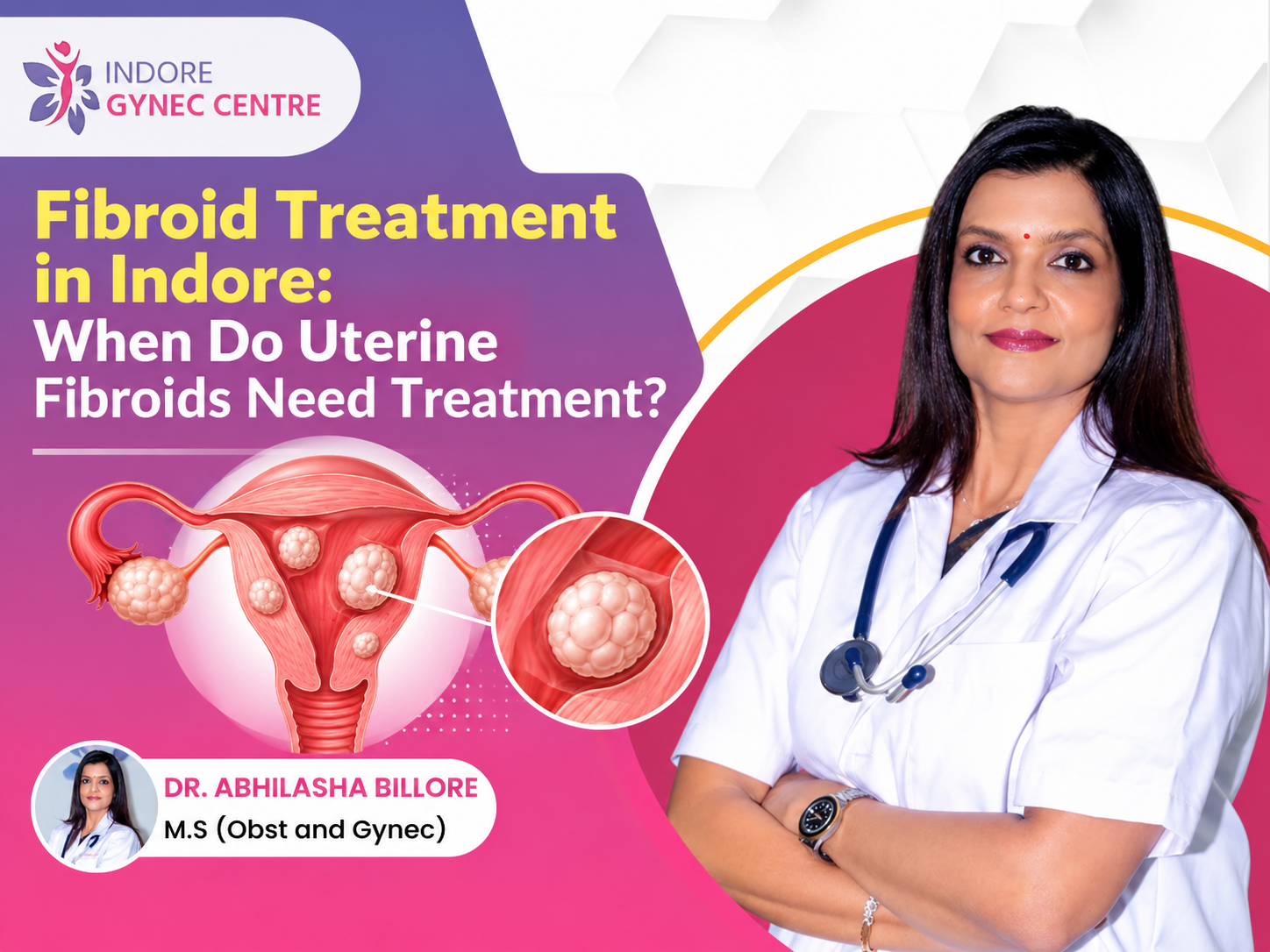
Uterine fibroids are common non-cancerous growths that develop in or around the uterus. While some women may have fibroids without noticeable symptoms, others can experience heavy menstrual bleeding, pelvic pain, pressure, irregular periods, or difficulty conceiving. Understanding when fibroids require treatment is important for protecting reproductive health and overall well-being.
Dr. Abhilasha Khandelwal Billore, an experienced Gynecologist, Obstetrician, Laparoscopic Surgeon, and Infertility Specialist in Indore, provides personalized care for women dealing with fibroids and related gynecological concerns. With 18+ years of experience, she focuses on accurate diagnosis and individualized treatment planning.
If you are experiencing symptoms associated with fibroids, consulting an experienced Gynecologist in Indore can help identify the size, location, and number of fibroids and determine whether treatment is necessary. With proper evaluation, Fibroid Treatment in Indore can be planned according to your symptoms, age, reproductive goals, and overall health.
What Are Uterine Fibroids?
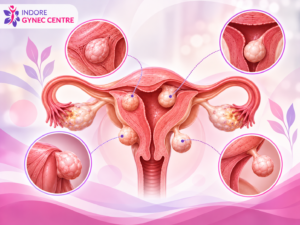
Uterine fibroids are benign growths that develop from the muscular tissue of the uterus. They can vary considerably in size and may occur as a single growth or multiple fibroids.
Some fibroids remain small and cause no symptoms, while larger or strategically located fibroids may affect menstrual cycles, fertility, pregnancy, or daily comfort.
Common types include:
- Intramural fibroids: Develop within the muscular wall of the uterus.
- Submucosal fibroids: Grow toward the inner uterine cavity and may cause heavy bleeding.
- Subserosal fibroids: Develop on the outer surface of the uterus and may create pressure symptoms.
- Pedunculated fibroids: Grow on a stalk attached to the uterus.
The appropriate Uterine Fibroid Treatment in Indore depends on the type, size, location, symptoms, and individual health requirements.
What Causes Uterine Fibroids?
The exact cause of fibroids is not completely understood. However, several factors may contribute to their development and growth.
Hormonal Factors
Estrogen and progesterone influence the growth of the uterine lining and may also affect fibroid growth. Fibroids often become more active during reproductive years and may change after menopause.
Family History
Women with a close family history of fibroids may have a higher likelihood of developing them. Genetic factors can play a role in the development of uterine fibroids.
Age and Reproductive Factors
Fibroids are commonly diagnosed during the reproductive years. Hormonal changes during this period may influence their growth.
Other Risk Factors
Body weight, lifestyle factors, and certain metabolic or hormonal conditions may also be associated with an increased risk. However, having these factors does not necessarily mean that fibroids will develop.
Understanding the Causes of Uterine Fibroids can help women recognize potential risk factors and seek timely medical evaluation.
What Are the Symptoms of Uterine Fibroids?
Fibroids do not always cause symptoms. When symptoms occur, they can range from mild discomfort to problems that significantly affect daily life.
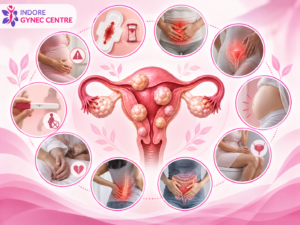
Common Uterine Fibroid Symptoms include:
- Heavy or prolonged menstrual bleeding
- Painful periods
- Pelvic pain or pressure
- Abdominal fullness or enlargement
- Frequent urination
- Constipation or pressure on the bowel
- Lower back pain
- Pain during sexual intercourse
- Difficulty conceiving
- Repeated pregnancy complications in some cases
Heavy menstrual bleeding can sometimes lead to anemia, resulting in tiredness, weakness, or shortness of breath.
If these symptoms persist or interfere with your daily activities, a consultation with a Fibroid Specialist in Indore is recommended.
When Do Uterine Fibroids Need Treatment?
Not every fibroid requires immediate treatment. Small fibroids that do not cause symptoms may simply be monitored through regular medical examinations and imaging.
However, treatment may be considered when fibroids cause:
1. Heavy or Prolonged Bleeding
If menstrual bleeding is unusually heavy or continues for several days beyond your normal cycle, evaluation is important. Persistent blood loss can cause anemia and affect quality of life.
2. Significant Pelvic Pain or Pressure
Large fibroids can put pressure on surrounding organs, causing pelvic heaviness, abdominal discomfort, frequent urination, or bowel-related symptoms.
3. Fertility Problems
Certain fibroids, particularly those that affect the uterine cavity, may interfere with conception or implantation. If you are experiencing fertility concerns, a detailed evaluation can determine whether fibroids may be contributing to the problem.
4. Rapid Growth
A fibroid that appears to be growing significantly may require closer assessment. Your doctor will consider its characteristics, symptoms, and imaging findings before recommending treatment.
5. Repeated Pregnancy Problems
In some women, fibroids can affect pregnancy depending on their size and location. Women planning pregnancy may benefit from discussing fibroid management with a Fibroid Doctor in Indore before conception.
6. Symptoms Affecting Daily Life
Even when a fibroid is not very large, symptoms that interfere with work, sleep, exercise, or everyday activities may be a reason to consider treatment.
How Are Uterine Fibroids Diagnosed?
Diagnosis usually begins with a detailed medical history and gynecological examination. Your doctor may ask about menstrual bleeding, pelvic pain, pregnancy history, fertility concerns, and other symptoms.
An ultrasound is commonly used to identify fibroids and assess their size and location. Depending on the situation, additional imaging or investigations may be recommended.
A proper Infertility Diagnosis or gynecological evaluation may also be required when fibroids are associated with conception problems.
The findings help your doctor decide whether monitoring is sufficient or whether active treatment should be considered.
What Are the Treatment Options for Fibroids?
There is no single treatment suitable for every woman. Fibroid Treatment in Indore is generally individualized according to symptoms, fibroid characteristics, age, reproductive plans, and overall health.
Observation and Regular Monitoring
Women with small fibroids and minimal or no symptoms may not need immediate intervention. Periodic examinations and imaging can help monitor changes.
Medicines
Certain medicines may help manage symptoms such as heavy menstrual bleeding or pelvic discomfort. Medication may control symptoms but does not necessarily remove the fibroid.
Myomectomy
A myomectomy is a surgical procedure used to remove fibroids while preserving the uterus. It may be considered for women who have significant symptoms or fertility-related concerns.
Depending on the location and size of the fibroids, myomectomy may sometimes be performed using minimally invasive techniques.
Laparoscopic Fibroid Surgery
Laparoscopic Fibroid Surgery in Indore uses small abdominal incisions and specialized instruments to remove suitable fibroids. Compared with traditional open surgery, minimally invasive approaches may offer smaller incisions and potentially faster recovery for appropriately selected patients.
A Laparoscopic Surgeon in Indore can determine whether laparoscopic treatment is appropriate after evaluating the fibroid’s size, number, and location.
Hysteroscopic Treatment
For selected submucosal fibroids that project into the uterine cavity, hysteroscopic removal may be considered. The procedure is performed through the natural vaginal and cervical pathway without large abdominal incisions.
Can Fibroids Be Treated Without Surgery?
In some cases, surgery may not be immediately necessary. Depending on symptoms and individual circumstances, medication and regular monitoring may help manage fibroids.
However, Fibroid Treatment Without Surgery may not be suitable for every patient. Large fibroids, severe symptoms, fertility concerns, or fibroids affecting the uterine cavity may require a different treatment approach.
A specialist should evaluate the condition before deciding whether observation, medication, or surgery is appropriate.
Fibroids and Pregnancy: Can You Conceive?
Many women with fibroids conceive and have healthy pregnancies. However, certain fibroids can affect fertility depending on their size and location.
Fibroids that distort the uterine cavity may have a greater impact on implantation and conception. In some cases, treatment before pregnancy may be recommended.
If you are planning a pregnancy and have known fibroids, discuss your condition with a Gynecologist in Indore. A personalized evaluation can help determine whether treatment is needed before trying to conceive.
When Should You See a Fibroid Specialist?
You should consider medical evaluation if you experience persistent heavy periods, pelvic pain, abdominal pressure, frequent urination, anemia, or fertility concerns.
A Fibroid Specialist in Indore can evaluate your symptoms and imaging findings and explain the available treatment options. Early assessment can prevent symptoms from becoming more disruptive and helps you understand whether your fibroids require treatment or monitoring.
Women with fertility concerns may also benefit from consultation with an experienced Infertility Doctor in Indore, particularly when fibroids are suspected to affect conception.
Dr. Abhilasha Khandelwal Billore – Experienced Gynecologist in Indore
Dr. Abhilasha Khandelwal Billore is a Gynecologist, Obstetrician, Laparoscopic Surgeon, and Infertility Specialist with 18+ years of experience in women’s healthcare.
She completed her M.S. in Obstetrics & Gynecology from the University of Gujarat and is a Gold Medalist in Gynecology. She is also the Founder of Indore Gynec Centre and Director of Coral Hospital.
Her expertise includes gynecological conditions such as fibroids, endometriosis, PCOD, menstrual disorders, infertility, and minimally invasive gynecological procedures.
For women seeking Fibroid Treatment in Indore, Dr. Abhilasha provides individualized evaluation and treatment planning based on symptoms, diagnostic findings, and reproductive goals.
Why Choose Indore Gynec Centre for Fibroid Treatment?
At Indore Gynec Centre, treatment is planned after understanding each patient’s symptoms, medical history, reproductive goals, and diagnostic reports.
- 18+ Years of Experience: Experienced care in gynecology and women’s health.
- Personalized Treatment: Management is tailored to individual needs.
- Minimally Invasive Expertise: Laparoscopic and hysteroscopic procedures for suitable cases.
- Comprehensive Women’s Care: Support for fibroids, infertility, pregnancy, PCOD, endometriosis, and other gynecological conditions.
- Fertility-Focused Approach: Treatment planning considers future pregnancy goals whenever relevant.
FAQs About Fibroid Treatment
1. Do all uterine fibroids require treatment?
No. Fibroids that are small and do not cause symptoms may only require regular monitoring. Treatment is generally considered when symptoms become significant or when fibroids affect fertility or pregnancy.
2. Can fibroids go away on their own?
Fibroids may change in size over time, particularly with hormonal changes. However, they do not always disappear naturally. Your doctor can recommend appropriate monitoring or treatment.
3. Is surgery always required for fibroids?
No. Some women can manage symptoms with observation or medication. Surgery may be considered when symptoms are severe, fibroids are significantly affecting health, or fertility is a concern.
4. Can laparoscopic surgery remove fibroids?
Yes, laparoscopic myomectomy can remove selected fibroids through small abdominal incisions. Suitability depends on the size, number, and location of fibroids.
5. Can fibroids affect pregnancy?
Certain fibroids may affect conception or pregnancy depending on their size and location. Women planning pregnancy should discuss their condition with a gynecologist for appropriate guidance.
Conclusion: Fibroid Treatment in Indore
Uterine fibroids are common and do not always require immediate treatment. However, heavy menstrual bleeding, persistent pelvic pain, pressure symptoms, fertility concerns, or pregnancy-related issues should not be ignored. The right Fibroid Treatment in Indore depends on the individual patient’s symptoms, fibroid characteristics, age, and reproductive goals. Early evaluation by an experienced Gynecologist in Indore can help determine whether monitoring, medication, minimally invasive treatment, or surgery is appropriate. If you are experiencing symptoms of fibroids or have concerns about fertility and pregnancy, timely consultation can help you understand your condition and choose an appropriate treatment plan. used keyword heading